



Detroit’s underground tells a different story than most growing metros. Decades of population decline left a collection system originally built for nearly twice the current population, and that oversized, aging network now carries its own unique set of infiltration challenges.
For engineers and contractors managing sewer rehabilitation across Detroit and Wayne County, inflow and infiltration (I&I) has remained central to the Great Lakes Water Authority’s long-term capital planning. Recent heavy rain events across southeast Michigan have continued to test a wastewater collection system built for a city that no longer exists at its historic size.
Two Sources, One Oversized Network
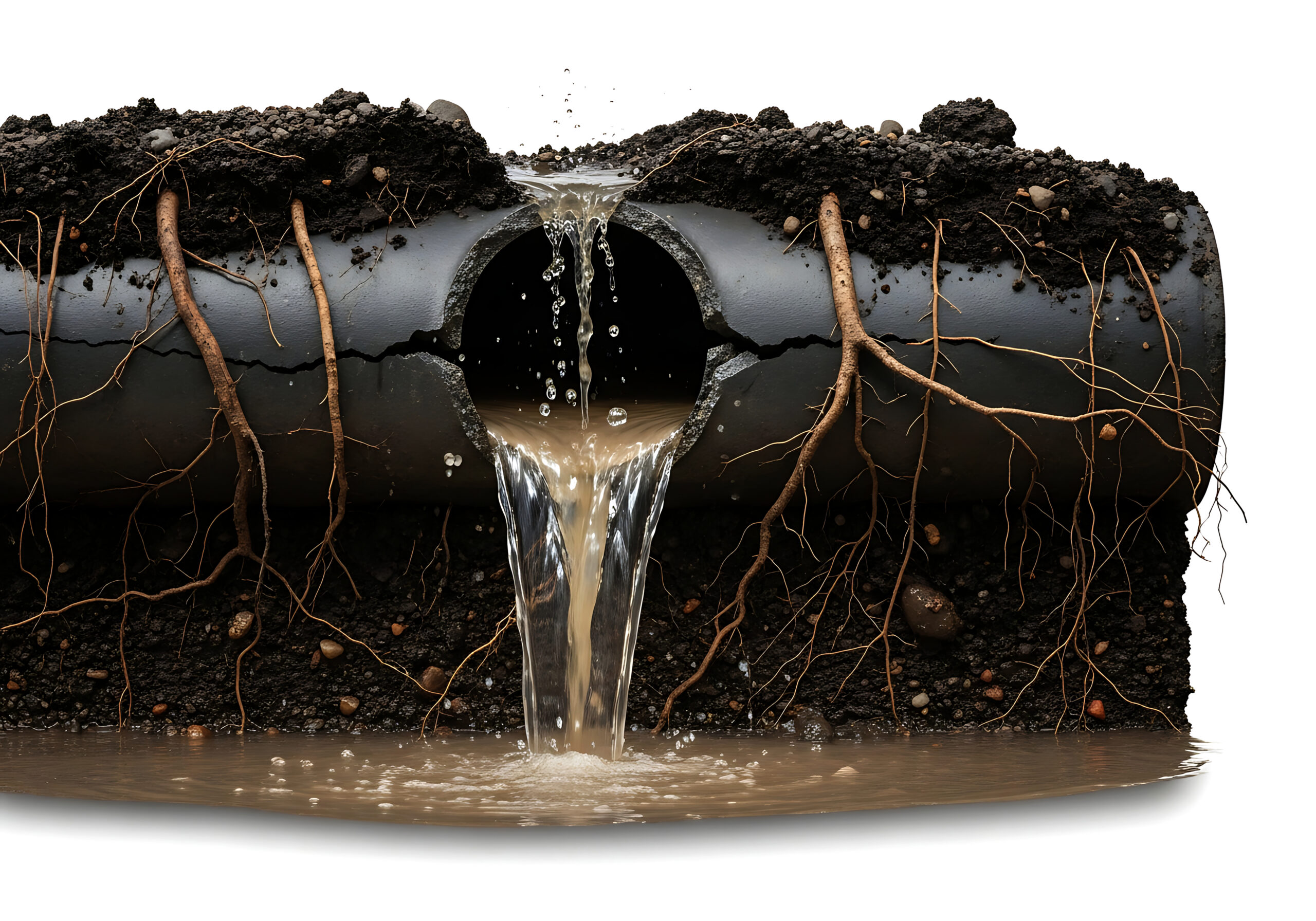
Groundwater infiltration in Detroit occurs when cracked or broken pipes, leaking pipe joints, and deteriorated manholes let water seep into the sanitary sewer system, a problem compounded by decades of deferred maintenance in a shrinking tax base. Sewer inflow takes a more direct path, entering through roof drains, yard drains, and other surface connections tied straight into the line.
Both draw down sewer capacity fast in a system originally engineered for a much larger population. An oversized network doesn’t drain faster just because fewer people are using it, and a wastewater collection system already carrying excess flow can still overflow when heavy rain events hit the Great Lakes region.
Why Legacy Infrastructure Complicates the Fix
Detroit contractors rely on cured-in-place pipe (CIPP) to renew deteriorated sewer mains without tearing up neighborhoods like Corktown and Eastern Market undergoing active redevelopment, and the trunk line typically comes through structurally sound. What surrounds that trunk line often tells a much older story.
Detroit’s early-20th-century industrial-era pipe sits beneath blocks that have seen decades of demolition, vacancy, and uneven reinvestment, and a sewer main lined but infiltration persists is a pattern crews encounter often once they check laterals serving properties that may no longer even be standing. A lateral abandoned decades ago can still be an active infiltration pathway.
Common infiltration sources across Detroit include:
- Deteriorated laterals beneath older Corktown and East Side properties, some tied to vacant or demolished structures
- Failed main-to-lateral connections stressed by decades of deferred maintenance
- Cracked host pipes weakened by more than a century of continuous industrial-era service
- Manhole joint failures allowing groundwater intrusion near Rouge River and Detroit River corridors
- Aging clay and concrete pipe throughout Detroit’s early-20th-century industrial neighborhoods
Finding Active Leaks in a Half-Empty System
Detroit’s network holds so many abandoned or underused connections from decades of population decline that a single inspection pass often overlooks the real source of a leak. Only by combining CCTV inspection and flow monitoring for I&I with smoke testing and flow monitoring for source identification can crews confirm whether the defect actually sits at the main, the lateral, the connection, or the structure.
The repair then depends on what turns up: structural trunk-line deterioration calls for mainline CIPP; a compromised service line calls for cured-in-place pipe lateral lining; a joint separated by deferred maintenance calls for main-to-lateral connection rehabilitation; a structure cracked by decades of neglect calls for manhole rehabilitation; and a small, active, localized leak often just needs injection grouting.
Why This Matters for Municipal Sewer Budgets
The Great Lakes Water Authority continues working to control the cost of pumping and treating unwanted groundwater across a service area shaped by population decline and a shrinking ratepayer base. Sewer overflows during heavy rain carry real regulatory consequences in a region working to protect the Detroit River and Great Lakes water quality.
Wastewater utility capacity management here depends on treating the network as one connected system, not a patchwork of legacy repairs. Specifying CIPP for municipal sewer projects handles the mainline, but rehabilitating public and private sewer laterals, connections, and manholes alongside it is what actually reduces wet-weather flows across a city carrying infrastructure built for a much larger population.
Right-sizing Detroit’s infiltration strategy for a smaller population means treating the mains, laterals, connections, and manholes as pieces of the same problem, not four separate ones.
Find a WRT-certified installer serving Detroit and Wayne County to assess your collection system’s full scope of I&I sources.